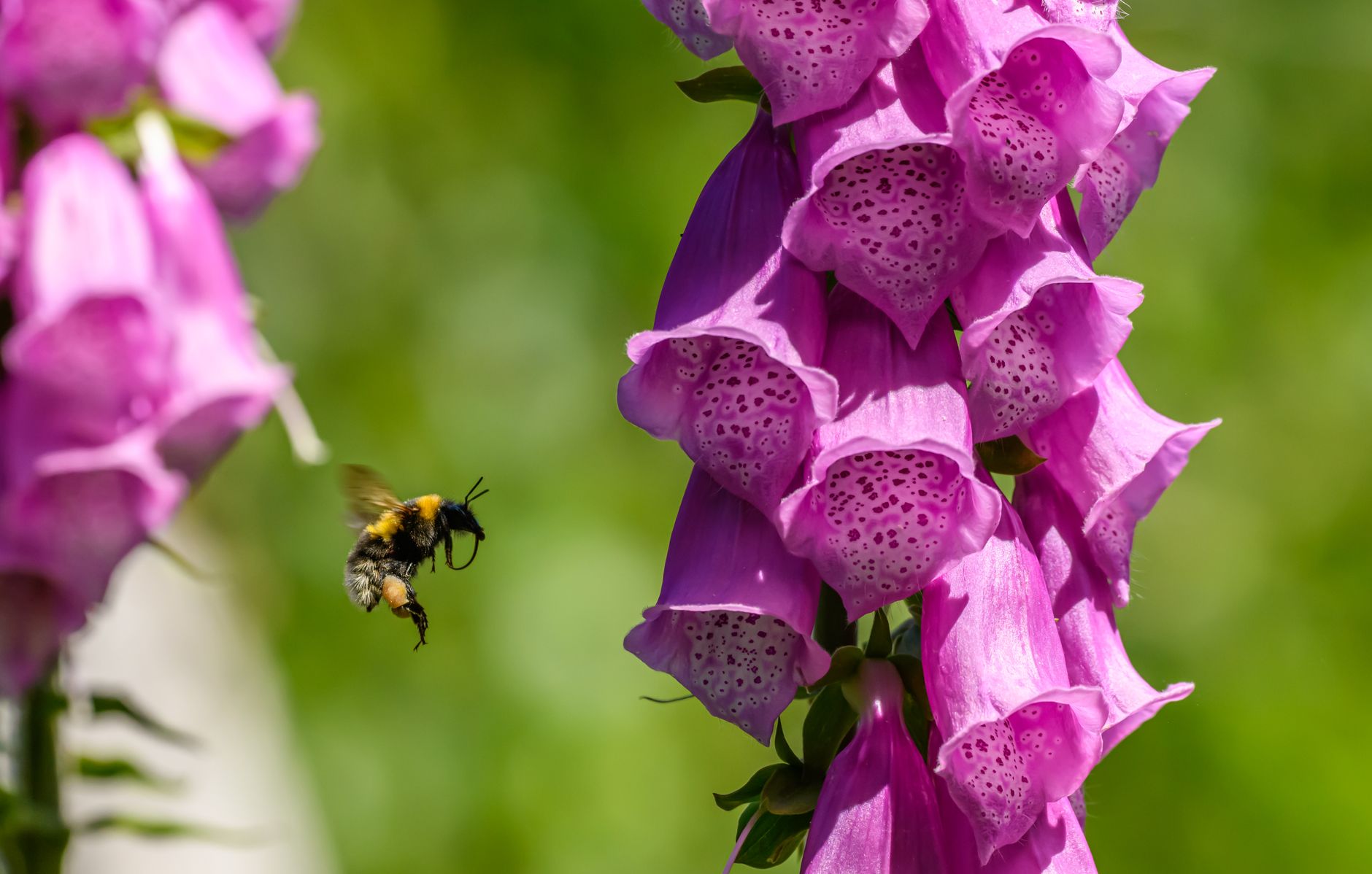

One of my favorite flowers is foxglove, Digitalis purpurea. It has been said that the name foxglove is derived from the old English name “Foxes Glofa.” Legend has it that sly foxes used the flowers to magically sheathe their paws as they stealthily committed their moonlit raids into the chicken coops of rural villagers. The association is natural because the foxgloves grew on the wooded hillside slopes that the foxes chose for their dens. The scientific genus name also refers to the fact that foxglove flowers are just about the size to slip your fingers into, as the Latin word digitalis literally translates to measuring a finger’s breadth. As an herbalist, I call it pretty poison, as it has the ability to kill or save a life. Depending on the species, the Digitalis plants may contain several deadly, physiological and chemically related cardiac and steroidal glycosides. Thus Digitalis has earned several more sinister names: Dead Man’s Bells and Witches’ Gloves.
Foxglove as Medicine
Foxglove contains cardiac glycosides that can cause cardiac arrest, but pharmaceutical derivatives of the Digitalis plant are used to create the drugs digoxin and digitoxin.
These drugs improve contractility in the heart muscle of those with congestive heart failure, supraventricular tachycardia, atrial fibrillation, and paroxysmal atrial tachycardia.
Digoxin is eliminated from the body via the kidneys, while digitoxin is eliminated via the liver and can therefore be used in patients with poor or erratic kidney function.
Digoxin was first approved for heart failure in 1998 under regulations by the Food and Drug Administration on the basis of prospective randomized studies and clinical trials. It was also approved for the control of ventricular response rate in patients with atrial fibrillation.
American College of Cardiology/American Heart Association guidelines recommend digoxin for symptomatic chronic heart failure in patients with reduced systolic function, preservation of systolic function, and/or rate control for atrial fibrillation with a rapid ventricular response.
Heart Failure Society of America guidelines for heart failure provide similar recommendations.
Beware
Foxglove is among the most poisonous plants grown in the landscape. The entire plant is toxic, including the roots and seeds, although the leaves of the upper stem are particularly potent. Just a nibble may be enough to potentially cause death.
Most animals seem to instinctively know not to nibble on any part of the plant.
Do not grow foxglove where small children or pets will be present. There have been instances of people confusing Digitalis with the relatively harmless Symphytum, or comfrey plant, which is often brewed into a tea, with fatal consequences.
Other fatal accidents have involved children drinking water from a vase containing Digitalis plants.
Drying does not reduce the toxicity of the plant.
Do I Use Foxglove?
The short answer: No way!
In answer to the title question, foxglove is a medicine in the right hands and a deadly poison to most of us. I grow it under confined and therefore safe conditions for its beauty.
Herbalists have largely abandoned the use of foxglove because of its narrow therapeutic index and the difficulty of determining the amount of active drug in herbal preparations.
It is important to never, ever attempt to create your own medicines from this plant. Only strictly controlled pharmaceutical preparations, in carefully determined doses, should be used under the guidance of a qualified medical professional.
Digitoxin exhibits similar toxic effects to the more commonly used digoxin. These include anorexia, nausea, diarrhea, confusion, vomiting, visual disturbances, and cardiac arrhythmias.
Anti-digoxin antibody fragments, which are the specific treatment for digoxin poisoning, are also effective in cases of serious digitoxin toxicity.
Growing Foxglove at Home
Growing Information
- Average planting success with this species: 50%
- Height: 2 to 5 feet
- Germination: 20 to 30 days
- Optimum soil temperature for germination: 60–65°F
- Sowing depth: Surface sow
- Blooming period: June through September
- Average seeds per pound: 4,360,000
- Seeding rate: ½ pound per acre
- Suggested use: Shaded areas, wildflower mixes, and waste places
Foxglove plants are classified as biennials. Leaves form a rosette close to the ground during the first year, followed by a flowering spike in the second and final year.
Under favorable growing conditions, however, they often last longer, blooming another year or two beyond what their biennial classification would suggest. In this case, they may be considered herbaceous perennials.
Further complicating any positive life-cycle identification for the novice is the fact that foxglove plants often reseed themselves.
Important Safety Note: Foxglove is highly toxic. Choose growing locations carefully, particularly where children and pets may be present. Never use foxglove in homemade herbal preparations.
Foxglove in Fiction
Foxglove has made its way into literature, television, and music, often appearing in rather sinister circumstances.
Literature
- Used as the murder weapon in Agatha Christie’s Appointment with Death.
- Used as the murder weapon in Elizabeth Peters’ Die for Love.
Television
- Murder 101: College Can Be Murder.
- CSI: The Descent of Man, Season 9, Episode 19, where foxglove is used as a murder weapon along with a crop duster.
- Columbo: Uneasy Lies the Crown, Season 9, Episode 5, featuring Digitalis as a poison.
- McMillan & Wife: Affair of the Heart, Season 6, Episode 5, also features Digitalis as a poison.
Music
- In the Decemberists’ song The Rake’s Song, from the album The Hazards of Love, the narrator murders his daughter by feeding her foxglove.







Leave a Reply